
Unternehmen in Quibala
| Bereich von Quibala, Provinz Cuanza Sul | 10.321,9 km² |
| Bevölkerung | 136.852 |
| Männliche Bevölkerung | 67.214 (49,1 %) |
| Weibliche Bevölkerung | 69.638 (50,9 %) |
| Bevölkerungsänderung von 1975 bis 2015 | +882,9 % |
| Bevölkerungsänderung von 2000 bis 2015 | +52,1 % |
| Mittleres Alter | 16,4 |
| Mann im mittleren Alter | 15,8 |
| Frau im mittleren Alter | 16,9 |
| Vorwahlen | 236 |
| Zeit vor Ort | Freitag 02:57 |
| Zeitzone | Westafrikanische Normalzeit |
| Geogr. Länge & Breite | -10.73366° / 14.97995° |
Quibala, Provinz Cuanza Sul - Karte
Quibala, Provinz Cuanza Sul Bevölkerung
Jahr 1975 bis 2015| Daten | 1975 | 1990 | 2000 | 2015 |
|---|---|---|---|---|
| Bevölkerung | 13.923 | 47.751 | 89.959 | 136.852 |
| Bevölkerungsdichte | 1,35 / km² | 4,63 / km² | 8,72 / km² | 13,3 / km² |
Quibala Bevölkerungsänderung von 2000 bis 2015
Anstieg von 52,1 % ab Jahr 2000 bis 2015| Standort | Änderung seit 1975 | Änderung seit 1990 | Änderung seit 2000 |
|---|---|---|---|
| Quibala, Provinz Cuanza Sul | +882,9 % | +186,6 % | +52,1 % |
| Cuanza Sul | +874,8 % | +185 % | +50,7 % |
| Angola | +251,5 % | +125,2 % | +66,3 % |
Quibala, Provinz Cuanza Sul Durchschnittsalter
Durchschnittsalter: 16,4 Jahre| Standort | Mittleres Alter | Durchschnittsalter (weiblich) | Durchschnittsalter (männlich) |
|---|---|---|---|
| Quibala, Provinz Cuanza Sul | 16,4 Jahre | 16,9 Jahre | 15,8 Jahre |
| Cuanza Sul | 16,4 Jahre | 16,9 Jahre | 15,8 Jahre |
| Angola | 16,4 Jahre | 16,9 Jahre | 15,8 Jahre |
Quibala, Provinz Cuanza Sul Bevölkerungsbaum
Bevölkerung nach Alter und Geschlecht| Alter | Mann | Frau | Gesamt |
|---|---|---|---|
| Unter 5 | 13.361 | 13.171 | 26.532 |
| 5-9 | 11.093 | 10.990 | 22.083 |
| 10-14 | 8.089 | 8.038 | 16.127 |
| 15-19 | 6.575 | 6.748 | 13.323 |
| 20-24 | 5.489 | 6.046 | 11.535 |
| 25-29 | 4.914 | 5.404 | 10.318 |
| 30-34 | 3.841 | 4.136 | 7.977 |
| 35-39 | 3.519 | 3.817 | 7.337 |
| 40-44 | 2.744 | 2.828 | 5.573 |
| 45-49 | 2.248 | 2.342 | 4.590 |
| 50-54 | 1.789 | 1.973 | 3.762 |
| 55-59 | 1.235 | 1.329 | 2.565 |
| 60-64 | 892 | 997 | 1.889 |
| 65-69 | 514 | 628 | 1.142 |
| 70-74 | 423 | 532 | 955 |
| 75-79 | 211 | 281 | 493 |
| 80-84 | 152 | 201 | 354 |
| 85 Plus | 125 | 178 | 303 |
Quibala, Provinz Cuanza Sul Bevölkerungsdichte
Bevölkerungsdichte: 13,3 / km²| Standort | Bevölkerung | Gebiet | Bevölkerungsdichte |
|---|---|---|---|
| Quibala, Provinz Cuanza Sul | 136.852 | 10.321,9 km² | 13,3 / km² |
| Cuanza Sul | 1,8 Millionen | 55.365,3 km² | 31,8 / km² |
| Angola | 24,8 Millionen | 1.247.144,5 km² | 19,9 / km² |
Quibala, Provinz Cuanza Sul Historische und projizierte Bevölkerung
Geschätzte Bevölkerung von 1100 bis 2100Sources:
1. JRC (European Commission's Joint Research Centre) work on the GHS built-up grid
2. CIESIN (Center for International Earth Science Information Network)
3. [Verknüpfung] Klein Goldewijk, K., Beusen, A., Doelman, J., and Stehfest, E.: Anthropogenic land use estimates for the Holocene – HYDE 3.2, Earth Syst. Sci. Data, 9, 927–953, https://doi.org/10.5194/essd-9-927-2017, 2017.
Human Development Index (HDI)
Statistischer zusammengesetzter Index der Lebenserwartung, der Bildung und des Pro-Kopf-Einkommens.Sources: [Link] Kummu, M., Taka, M. & Guillaume, J. Gridded global datasets for Gross Domestic Product and Human Development Index over 1990–2015. Sci Data 5, 180004 (2018) doi:10.1038/sdata.2018.4
Quibala, Provinz Cuanza Sul CO2-Emissionen
Kohlendioxid (CO2) -Emissionen pro Kopf in Tonnen pro Jahr| Standort | CO2-Emissionen | CO2-Emissionen pro Kopf | Intensität der CO2-Emissionen |
|---|---|---|---|
| Quibala, Provinz Cuanza Sul | 118.144 tn. sh. | 0,86 tn. sh. | 11,4 tn. sh./km² |
| Cuanza Sul | 1.518.425 tn. sh. | 0,86 tn. sh. | 27,4 tn. sh./km² |
| Angola | 21.454.742 tn. sh. | 0,86 tn. sh. | 17,2 tn. sh./km² |
Quibala, Provinz Cuanza Sul CO2-Emissionen
| 2013 CO2-Emissionen (Tonnen/Jahr) | 118.144 tn. sh. |
| 2013 CO2-Emissionen (Tonnen/Jahr) pro Kopf | 0,86 tn. sh. |
| 2013 Intensität der CO2-Emissionen (Tonnen/km²/Jahr) | 11,4 tn. sh./km² |
Naturgefahrenrisiko
Relatives Risiko von 10| Dürre | Mittel (5,7) |
* Das Risiko, insbesondere in Bezug auf Überschwemmungen oder Erdrutsche, gilt möglicherweise nicht für das gesamte Gebiet.
Sources: 1. Dilley, M., R.S. Chen, U. Deichmann, A.L. Lerner-Lam, M. Arnold, J. Agwe, P. Buys, O. Kjekstad, B. Lyon, and G. Yetman. 2005. Natural Disaster Hotspots: A Global Risk Analysis. Washington, D.C.: World Bank. https://doi.org/10.1596/0-8213-5930-4.
2. Center for Hazards and Risk Research - CHRR - Columbia University, Center for International Earth Science Information Network - CIESIN - Columbia University, and International Research Institute for Climate and Society - IRI - Columbia University. 2005. Global Drought Hazard Frequency and Distribution. Palisades, NY: NASA Socioeconomic Data and Applications Center (SEDAC). https://doi.org/10.7927/H4VX0DFT.
Quibala, Provinz Cuanza Sul
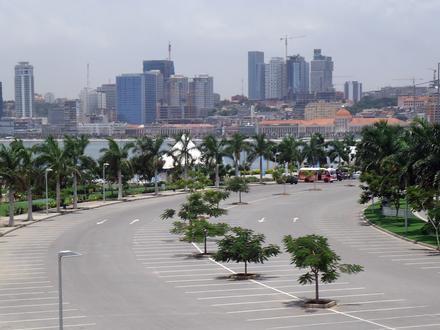
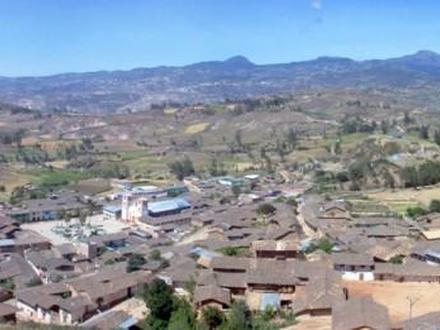
Quibala (auch Kibala) ist eine Ortschaft und ein Landkreis in Angola. Quibala Wikipedia-Seite

Über unsere Daten
Die Daten auf dieser Seite werden mithilfe einer Reihe öffentlich verfügbarer Tools und Ressourcen geschätzt. Es wird ohne Gewähr geliefert und kann Ungenauigkeiten enthalten. Benutzung auf eigene Gefahr. Sehen Sie hier für weitere Informationen.
